33/19, First floor,1st Main Rd, Jai Nagar, Arumbakkam, Chennai, Tamil Nadu 600106
Call us for inquiry : +91 90926 46761

Printer Service Training
Printer Service Training
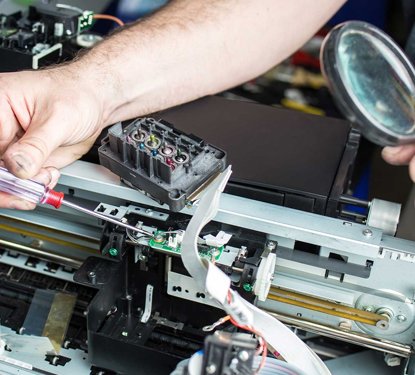
Chip-level printer repairing course is a technical program that focuses on diagnosing and fixing complex electronic faults within printer hardware, specifically on the motherboard (PCB) and logic cards. These courses move beyond basic mechanical maintenance to include advanced electronics, soldering, and schematic diagram reading.
Core Modules & Topics
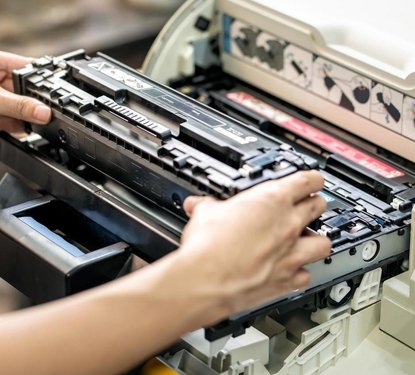
Training typically covers various printer technologies, including LaserJet, Inkjet/Deskjet, Dot Matrix, and Multifunction Printers (MFPs).
- Basic Electronics: Understanding differences between electrical and electronics, AC/DC current, and checking components like fuses, resistors, capacitors, diodes, and transistors using a multimeter.
- Motherboard (PCB) Repair: Chip-level troubleshooting, including identifying faults in the logic card using schematic diagrams and performing component-level soldering and desoldering.
- Power Supply Units (PSU): Studying SMPS boards, checking burnt circuits, and addressing voltage issues.
- LaserJet Specifics: Concepts of PCB control units, power units, lens assembly, and scanner device repair.
- Inkjet/Deskjet Specifics: Paper feeder sensors, door sensors, resetting printers, and cartridge inkjet refilling.
- Dot Matrix Specifics: Power supply and processor section analysis, pinhead cleaning, and assembling/disassembling.
- Mechanical & General Maintenance: Calibration processes, paper feed mechanism repair (fixing jams, replacing rollers), and fuser assembly maintenance.
Struggling to find a job?
Take the first step with expert technical training